
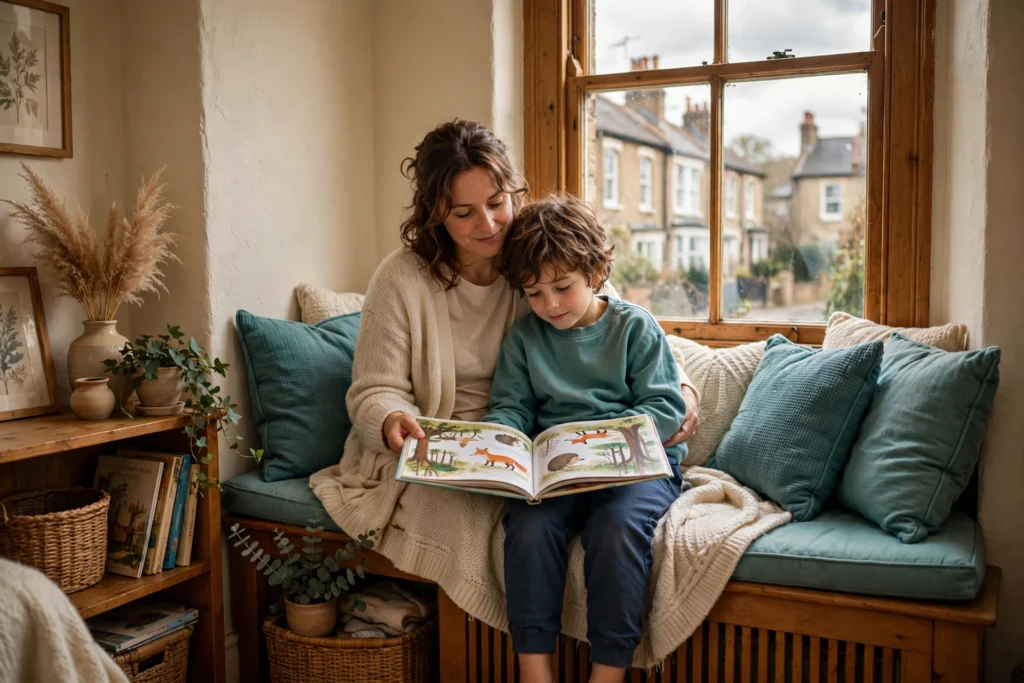
A reading routine at home sticks when it happens at the same time, in the same place, every day, and when it feels easy enough to repeat. Pick one calm slot in the day, keep sessions short, and anchor reading to something your child already does, like after tea or before bed. Small daily reading beats a long session once a week, and a routine your child can predict is one they will follow without a daily argument.
Key Takeaways
- A reading routine at home works best at a fixed time and in a fixed spot, repeated every day.
- Short sessions of 15 to 20 minutes beat one long weekly session for building a lasting habit.
- Anchor reading to an existing habit, such as after dinner or before bed, so it needs no reminder.
- Let your child choose what to read, and keep books within easy reach at home.
- Missed days are normal. Restart the next day instead of doubling up to catch up.
- Use Sparx Reader homework as part of the routine, not as an extra task on top of it.
What a Reading Routine at Home Actually Looks Like
A reading routine is not a timetable pinned to the fridge. It is a small, repeatable pattern: same time, same place, same simple start. For most families that means 15 to 20 minutes of reading after tea, or a chapter before bed. The exact time matters less than the repetition. When reading happens in the same slot every day, your child stops asking when it will happen and starts expecting it, which removes most of the daily negotiation.
Keep the routine simple enough to survive a busy evening. If it needs a special setup or a perfect quiet house, it will fall apart on the first hard day. A book, a comfortable seat and a calm ten minutes is enough. Start small if reading has not been a daily habit so far. Ten minutes a day for the first two weeks builds the pattern, and once the pattern is set, you can stretch the time slowly.
Pick a Time and Anchor It to Something That Already Happens
The easiest way to make a reading routine stick is to attach it to something your child already does every day. After dinner works well for many families, because the table is cleared and the evening is settling down. Before bed works well too, because reading helps children wind down and gives the day a calm ending. After school suits children who still have energy, though it can clash with clubs and homework.
Choose one slot and protect it. If reading time moves around the day, it becomes a decision every evening, and decisions are where routines die. A fixed slot turns reading into something that simply happens, like brushing teeth. Tell your child the plan in plain words: reading happens after tea, every day, for twenty minutes. When the time is clear, children argue less, because there is nothing left to decide.
How Long Should Reading Time Last?
For primary school children, 15 to 20 minutes a day is a good target. For secondary school pupils, 20 to 30 minutes works well. These are guides, not rules. A child who is absorbed in a good book should be allowed to keep going, and a child who is tired should be allowed to stop early without a fuss. The goal is a daily habit, not a daily battle over minutes.
Watch for signs that the session is too long. If your child starts rushing, skipping pages or guessing at words, the session has gone on too long. Short, focused reading builds skill faster than long, tired reading. Stop while reading still feels good, and your child will come back to it willingly tomorrow. If your child uses Sparx Reader, the school sets a weekly reading target, and the routine is the easiest way to meet it. A short session each day spreads the target across the week instead of cramming it into Sunday evening. Our guide to Sparx Reader points and levels explains how weekly targets work.
Set Up a Reading Spot That Invites Reading
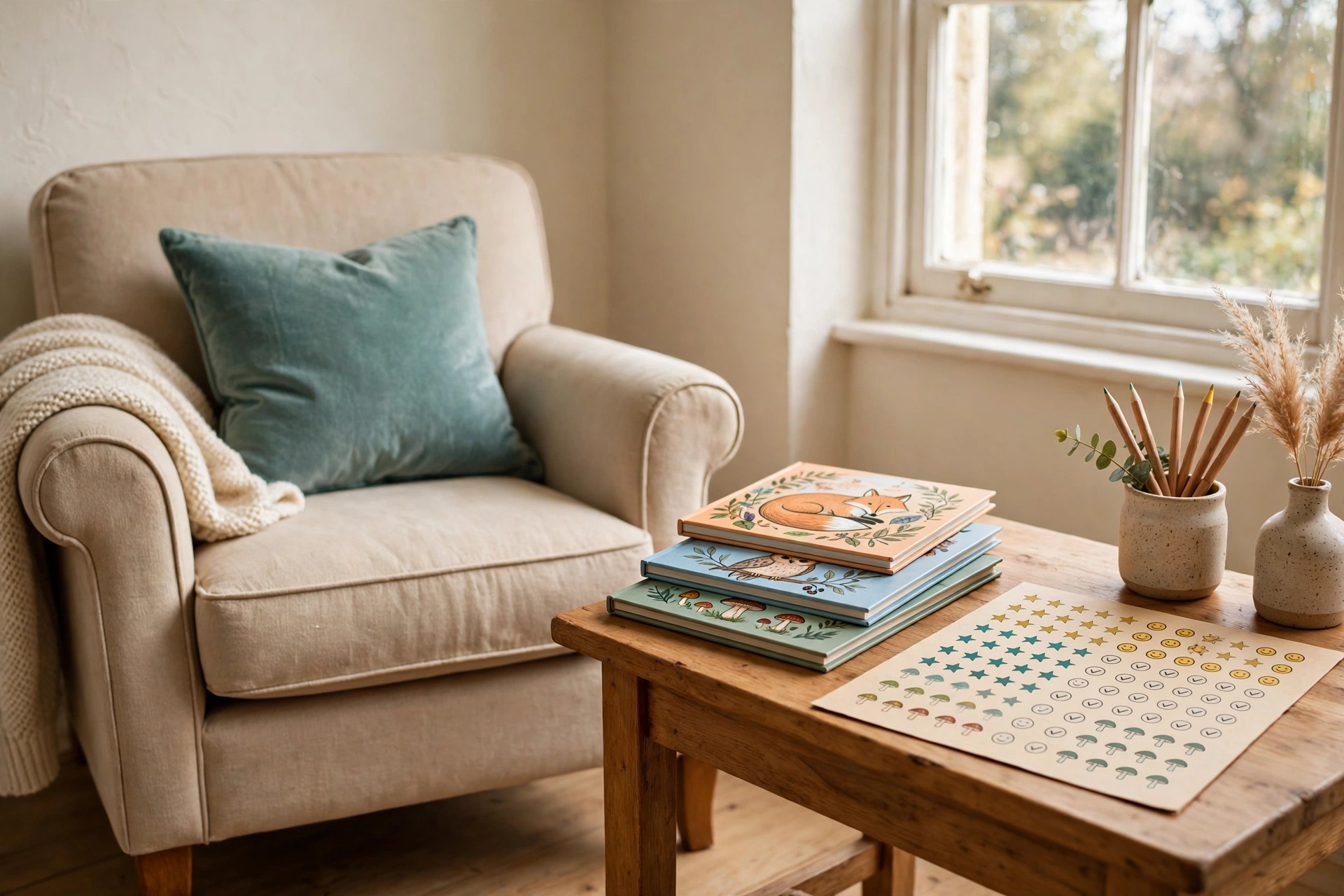
Children read more when books are easy to reach and the reading spot feels comfortable. Pick one place in your home for reading time: a corner of the sofa, a beanbag by the window, or a chair in a quiet room. Keep a small stack of books there so your child can pick one up without searching the house. A reading spot does not need to be fancy. It needs to be ready.
Keep screens away during reading time. A phone buzzing on the sofa or a television on in the background pulls attention away from the page, especially for younger children. If your child reads on a device for Sparx Reader, keep the device in reading mode and close other apps. Light matters too. A spot near a window in the daytime, or a warm lamp in the evening, makes reading comfortable. Our guide to building strong reading habits outside the classroom has more on setting up space and routine together.
Fit Sparx Reader Homework Into the Routine
Many families treat Sparx Reader as a separate job on top of reading time, which doubles the work and doubles the resistance. Fold it into the routine instead. If your child reads for twenty minutes after tea, let part of that time be their Sparx Reader book and quiz. The reading counts, the homework gets done, and the evening stays calm.
Check the Sparx Reader target together at the start of the week so there are no surprises. A quick look at the dashboard on Monday shows how much reading the week needs, and you can plan the sessions around clubs and busy evenings. If your child is stuck logging in, our Sparx Reader login guide walks through the steps, and if homework keeps showing as incomplete, the fix is usually a quiz that was never started. Our guide to homework showing as incomplete explains what to check first.
What to Do When Your Child Resists
Resistance is normal, especially in the first two weeks of a new routine. Do not turn it into a power struggle. Sit with your child for the first few sessions, read the first page together, or take turns reading aloud. A child who resists reading alone will often enjoy reading with a parent, and shared reading builds the habit just as well.
Let your child choose what to read. A child who picks their own book reads longer and enjoys it more than a child handed a book they did not want. Comics, magazines, non fiction about football or animals, and audiobooks all count as reading, especially while the routine is forming. The habit comes first. The reading level follows. Our guide to choosing your next Sparx Reader book has practical tips for picking books your child will actually finish.
Missed Days, Weekends and Holidays
Missed days will happen. A late evening, a school trip, an illness, or a family event will break the routine, and that is fine. The rule for missed days is simple: restart the next day. Do not double the reading time to catch up, and do not treat a missed day as a failure. A routine survives missed days. It dies when one missed day turns into a week of nothing.
Weekends need a plan of their own, because the school day structure disappears. Keep the same time slot if you can, even on Saturday and Sunday. If the family is out for the day, a chapter before bed still counts. Holidays work the same way. Pack a book, keep the bedtime slot, and let the routine travel with you. Expect the routine to wobble after a break, such as half term or Christmas. The first week back is the hardest, so keep sessions short and easy that week.
Make the Routine Visible
Children stick with routines they can see. A simple chart on the fridge, with a tick for each day of reading, turns an invisible habit into something your child can watch grow. Let your child add the tick themselves. That small act of marking progress matters, because it gives them ownership of the routine.
Streaks help too, but keep them gentle. Celebrate a week of daily reading with something small, like choosing the next book together. Avoid big rewards tied to long streaks, because a broken streak then feels like a punishment. Review the routine together every few weeks. Ask your child what is working and what is not. Small changes based on what your child tells you keep the routine alive far better than a rigid plan that nobody enjoys. A routine that adapts is a routine that lasts.
FAQ
How do I start a reading routine at home?
Pick one fixed time each day, such as after tea or before bed, choose a comfortable reading spot, and start with 15 to 20 minutes. Keep it the same every day for two weeks, and the routine will start to run itself.
How long should my child read each day?
Primary school children do well with 15 to 20 minutes a day, and secondary pupils with 20 to 30 minutes. Short daily sessions build a stronger habit than one long weekly session.
What if my child refuses to read?
Read together first, let your child choose the book, and try a different type of book if the current one is not working. Comics, magazines and audiobooks all count while the routine is forming.
Does Sparx Reader count towards a home reading routine?
Yes. Sparx Reader books and quizzes fit neatly into the daily reading slot, and short daily sessions spread the weekly target across the week instead of leaving it all for Sunday evening.
What should I do if we miss a day?
Restart the next day at the usual time. Do not double up to catch up, and do not treat a missed day as a failure. One missed day only breaks the routine if it turns into a week of nothing.
Final Thoughts
A reading routine at home that sticks is a small promise kept every day: same time, same place, a book your child chose, and a calm twenty minutes. Start small, anchor it to something that already happens, and let missed days pass without a fuss. Within a few weeks, reading stops being a task you have to start and becomes a part of the day your child expects. That is when the habit is real, and that is when the reading starts to grow on its own.
BookTrust offers simple reading tips for families that work well alongside a home routine, including ideas for reluctant readers and book suggestions by age. And if your child reads with Sparx, our Sparx Reader guide for parents explains how the programme fits into family life and what to do when it does not go smoothly.