
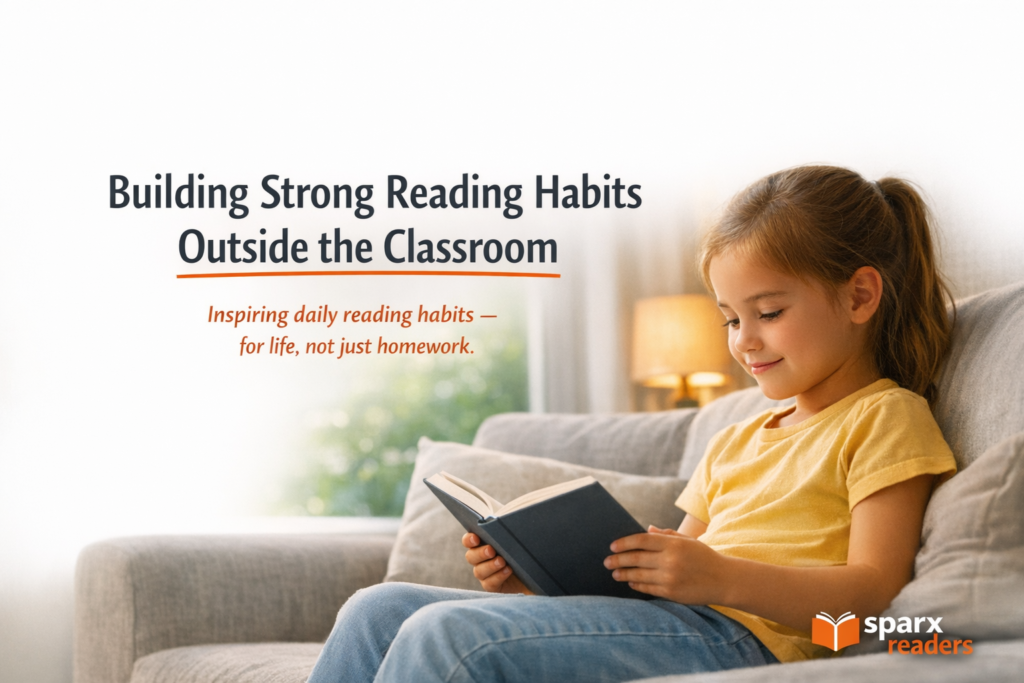
Reading habits do not grow by accident. You build them with structure, repetition, and the right environment.
If you want to read more outside of class, you need two things. A clear space. A fixed routine.
Here’s what works and why it works.
Why Reading Outside the Classroom Matters
When you leave the classroom, no one assigns chapters. No one checks your notes. You choose whether to read. That freedom shapes your growth.
In 2024, the National Endowment for the Arts reported that only 48 percent of U.S. adults read at least one book for pleasure in the previous year. Among students, daily voluntary reading time continued to decline compared to pre 2020 levels.
At the same time, a 2025 OECD education brief showed that students who read independently at least four times per week scored significantly higher in comprehension and analytical reasoning.
The pattern is clear. Regular reading improves focus and critical thinking.
Professor Maryanne Wolf, cognitive neuroscientist and author of Reader, Come Home, said in a 2024 interview, “Deep reading builds attention, empathy, and reasoning skills that digital skimming does not.”
You strengthen those skills when you read by choice.
Choose Housing That Supports Study
When you search for accommodation, look beyond rent and distance. Check for study desks, lighting, and quiet common areas.
Many purpose-built student accommodations now design rooms with study in mind. Platforms like amber list verified student properties that include desks, private study rooms, and structured living layouts that support routine.
The right housing removes daily friction.
Create a Space That Signals Focus
Your brain responds to cues. If you read in the same place every day, your mind learns what to expect.
Choose One Dedicated Spot
Pick a chair, desk, or corner. Keep it consistent. Do not rotate between your bed, sofa, and kitchen table.
When you sit there, you read. Nothing else.
Good lighting matters. A quiet area helps. Keep your phone out of reach. Small changes make a big difference.
Environmental psychologist Sally Augustin explained in 2024 that consistent physical cues train the brain to enter a focused state faster. Your surroundings shape your behavior more than you think.
Remove Friction
Keep your current book in that space. Add a pen or notebook. Make it easy to start.
If you have to search for your book every time, you delay the habit. Remove that delay.
Start simple. Sit down. Open the book. Read.
Build a Routine You Can Keep
Space helps. Routine locks the habit in place.
Set a Fixed Time
Choose a time and stick to it. Morning works well because distractions stay low. Evening works if you treat it like an appointment.
Do not say you will read when you feel like it. That rarely happens.
Say you will read at 7 am or 9 pm. Then do it.
James Clear, author of Atomic Habits, said in a 2024 education summit, “Consistency beats intensity.” Short daily reading builds stronger habits than long sessions once a week.
Ten to twenty minutes daily works. That is enough to finish several books each year.
Track Your Progress
Write down what you read. Keep a small log. Mark the days you complete your reading.
Visible progress keeps you accountable.
In 2025, a behavioral study from the University of London found that students who tracked reading sessions completed 32 percent more pages over eight weeks than those who did not.
Tracking works because it turns reading into a visible action.
Make Reading Habits Part of Your Identity
Habits last when they connect to how you see yourself.
Stop saying you want to read more. Say you are someone who reads daily.
That shift changes your decisions. When you see yourself as a reader, you protect that time.
Choose Books That Hold Your Attention
Do not force yourself through books you dislike. Interest drives consistency.
Mix genres. Try nonfiction, memoir, essays, or fiction. Rotate topics. Stay curious.
You read more when the material feels relevant to your life or goals.
Reduce Digital Distractions
Screens compete for your attention. Social media shortens your focus span.
A 2024 Pew Research survey found that 64 percent of young adults felt their attention span declined because of constant notifications.
Silence your phone. Close unused tabs. Give reading your full attention.
Focus strengthens with practice.
Support Young Readers at Home
If you guide a child or teenager, you shape their reading habits early.
Model the Behavior
Children copy what they see. If you read regularly, they notice.
Do not just tell them to read. Read beside them.
Build Family Reading Time
Set aside 20 minutes where everyone reads quietly. No devices. No interruptions.
In 2025, a Scholastic Kids and Family Reading Report found that children who saw adults reading at home were twice as likely to read for pleasure five days a week.
Habits grow through example.
Keep It Simple and Sustainable
Strong reading habits do not require complex systems.
You need:
- A fixed space
- A fixed time
- A simple tracking method
- Material you enjoy
Start small. Stay consistent. Protect your reading window.
Reading outside the classroom builds focus, discipline, and independent thinking. You control that growth.
Set the space. Set the time. Sit down and read.