

Reading gaps are one of the major challenges in secondary education. Schools often report wide differences in reading ability of students within the same year group, although they receive similar classroom instruction from the same teacher at same time. Evidence from structured reading trials and school case studies shows that the issue is rarely motivation alone. It is usually linked to inconsistent reading habits, disparate/uneven access to suitable texts, and limited visibility of independent reading outside schools due to lack of direct oversight/physical surveillance. Structured reading platforms such as Sparx Reader aim to address these issues and brings up consistency, accountability, and measurable engagement into independent reading.
Why Reading Gaps Continue to Widen in Secondary Schools
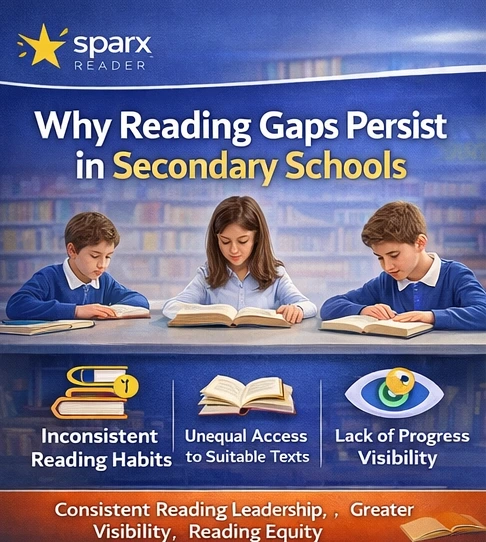
Reading gaps frequently increase after primary school instead of decreasing. Studies consistently indicate that students who begin secondary education with undermined reading confidence engage in reading less often as time progresses. This limits vocabulary exposure and hampers comprehension development. Educational institutions encounter real limitations as well. Teachers cannot monitor independent reading closely for every student, especially across large cohorts.
The Sparx Reader trial report highlights this structural issue. The study emphasized independent reading instead of classroom instruction. Results showed that students who rarely read prior to the intervention had difficulties sustaining regular reading routines without organized assistance. This indicates a broader trend observed in educational institutions. When reading is voluntary or not closely supervised, strong readers advance while less skilled readers lag further behind.
The Role of Independent Reading in Closing or Widening Gaps
Independent reading plays a central role in literacy development. However, its impact depends on frequency, text suitability, and sustained engagement. Case study material from schools using Sparx Reader shows that many students were previously completing reading logs without actually reading consistently. This made it difficult for schools to identify who needed support.
At Carshalton Boys Sports College, the school reported challenges in ensuring that independent reading translated into real reading time. Their experience reflects a common problem. Without reliable monitoring, reading becomes performative rather than developmental. This allows gaps to persist unnoticed until assessment points reveal significant differences in comprehension.
Why Traditional Reading Homework Often Fails Weaker Readers

Traditional reading homework relies heavily on self-reporting and parental oversight. This creates inequality. Students with supportive home environments often read more, while others disengage. The Sparx Reader trial documented improvements in reading consistency when expectations were clear and centrally monitored. Students were more likely to complete reading when tasks were structured and visible to teachers.
Rudheath Senior Academy’s published guidance on Sparx Reader also points to this issue. The school emphasises routine, clarity, and accountability in independent reading. Their approach suggests that reducing ambiguity around reading homework can support students who struggle with organisation and confidence.
How Structured Reading Changes Student Behaviour
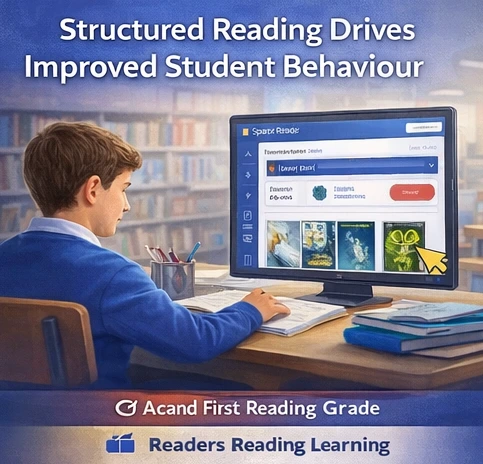
Structured reading does not remove choice. Instead, it frames choice within clear expectations. Sparx Reader allows students to select books matched to their reading level while maintaining consistent reading goals. Trial findings indicate that this balance supports engagement across ability ranges.
One key insight from the trial was that students were more likely to sustain reading over time when progress was visible. This matters for weaker readers. When reading feels endless and unrewarded, disengagement follows. Structured systems create feedback loops that encourage continuation rather than avoidance.
How Sparx Reader Supports Reading Equity
Reading equity depends on access, monitoring, and timely intervention. Sparx Reader supports equity by giving teachers visibility of reading behaviour across entire cohorts. According to trial evidence, teachers could identify students who were reading infrequently or abandoning books early. This allowed earlier support rather than reactive intervention.
School case studies also highlight the benefit of consistent expectations across year groups. When all students follow the same reading framework, disparities caused by teacher variation reduce. This supports students who previously relied on individual teacher encouragement to maintain reading habits.
Evidence from School Use and Trial Outcomes
The Sparx Reader trial report presents measured outcomes rather than anecdotal claims. Schools involved observed increased reading frequency among students who had previously read rarely. Importantly, the trial did not suggest instant transformation. Progress depended on sustained use and clear communication with students.
Carshalton Boys Sports College reported improved engagement when reading became a visible and normalised part of school routines. This aligns with broader literacy research showing that consistency matters more than short-term motivation. Rudheath Senior Academy’s implementation reinforces this finding by embedding reading expectations within homework structures.
Why Data Visibility Matters for Closing Reading Gaps
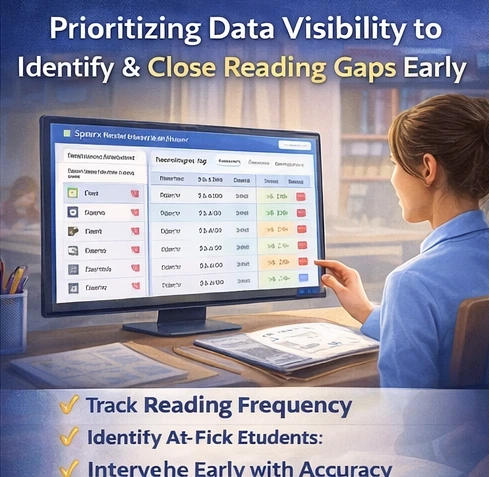
One of the most significant barriers to closing reading gaps is delayed identification. Without accurate data, schools often discover issues only after formal assessments. Structured reading platforms reduce this delay. Trial findings show that reading engagement data allowed teachers to act earlier.
This matters for EEAT. Schools must justify interventions with evidence. Data-led reading oversight supports inspection readiness and long-term improvement planning. It also reduces reliance on assumptions about student effort.
Turning Structured Reading into Long-Term Literacy Improvement
Structured reading alone does not replace teaching. However, it strengthens the foundations that teaching builds upon. Evidence from Sparx Reader use suggests that when independent reading becomes consistent, classroom comprehension improves indirectly.Teachers dedicate less time to tackling fundamental decoding challenges and more to analysis and interpretation.
Addressing reading disparities necessitates patience and comprehensive organizational consideration. Trial evidence and case studies from schools indicate that structured reading facilitates this by rendering reading habits observable, quantifiable, and long-lasting.
Conclusion
Reading gaps persist because of a lack of structure, oversight, and equity in independent reading. Information from the Sparx Reader trial and school applications shows that structured reading can address these problems while maintaining student independence. Sparx Reader aids schools in helping students of varying abilities by uplifting consistency, visibility, and early intervention. Gradually, this structured method cultivate more equitable chances for literacy advancement and narrows the divide between proficient and challenged readers.